
What Should We Validate First? A Practical Look at Customer Attention in Retail
- hankyung Park
- Jun 15
- 2 min read


Over the past few months, our team at NexGen AI has been exploring a simple but important question:
What actually captures customer attention in a retail environment?
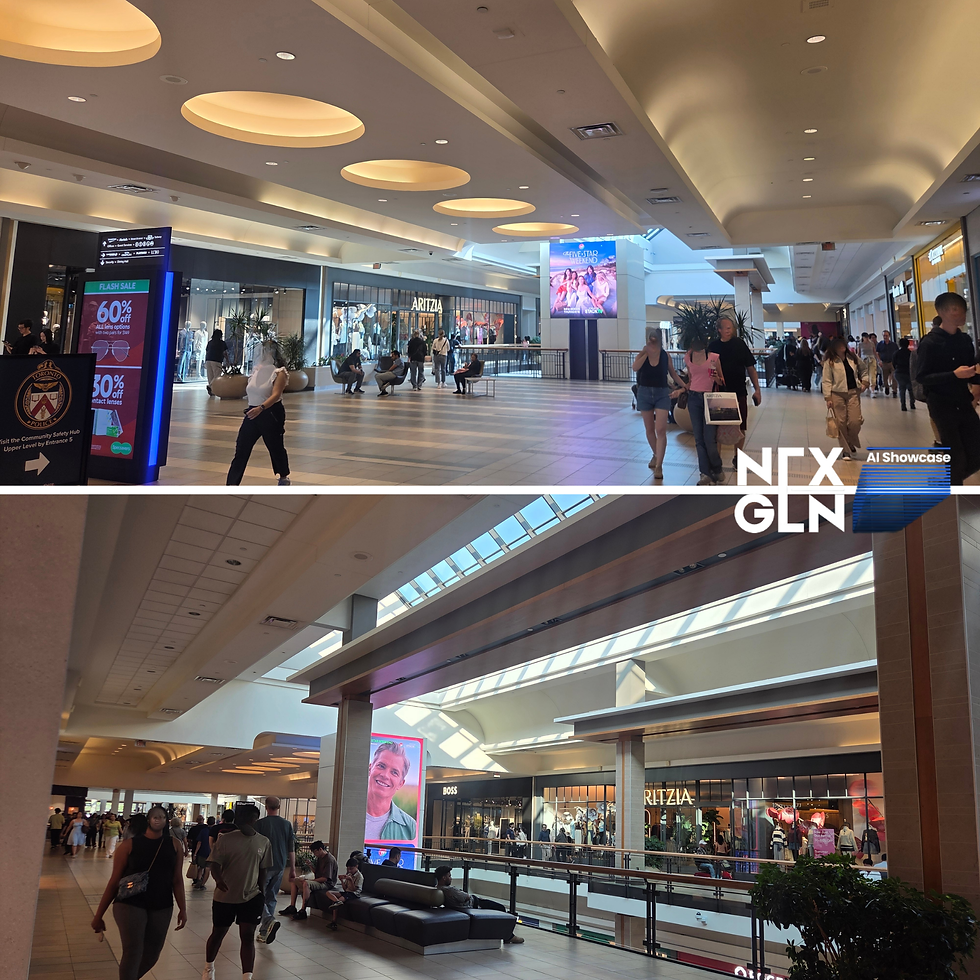
Through market research, field observations, and strategic analysis, we noticed something interesting. Customer attention does not always go where we expect it to.
A display can be highly visible, professionally designed, and positioned in what seems like a prominent location, yet still receive very little engagement. At the same time, less noticeable displays can sometimes attract more attention simply because they are placed within a customer's natural path or decision-making moment.
This observation led us to look beyond the display itself and focus more on the surrounding environment.
As we reviewed our findings, a consistent pattern began to emerge. Attention appears to be influenced by factors such as movement flow, spatial context, and where a person is within a space. In other words, visibility alone may not be enough.
The next challenge was deciding what to validate first.
There are many directions we could explore, including attention measurement systems, adaptive content, and AI-driven engagement tools. However, before investing in more complex solutions, we felt it was important to validate one of the most fundamental assumptions.
Does display placement itself influence customer attention?
For our current validation phase, we have chosen to focus on display placement optimization. The reason is simple: it allows us to test a clear hypothesis in a real environment without relying on complex technology or large-scale system development.
Our approach is intentionally straightforward. By keeping the display and content consistent while changing only the placement, we can better understand how different spatial contexts affect attention and engagement.
The goal is not to prove a final solution. Instead, it is to gather evidence that helps us determine whether placement should play a larger role in future retail display strategies.
Innovation does not always begin with advanced technology. Sometimes it starts by validating a basic assumption and understanding how people naturally behave within a space.
As we continue this work, we look forward to turning observation into evidence and using those insights to guide future retail experiences.


Comments